Our Work
Recent Projects
A few driveways, patios and slabs we've poured around the area.
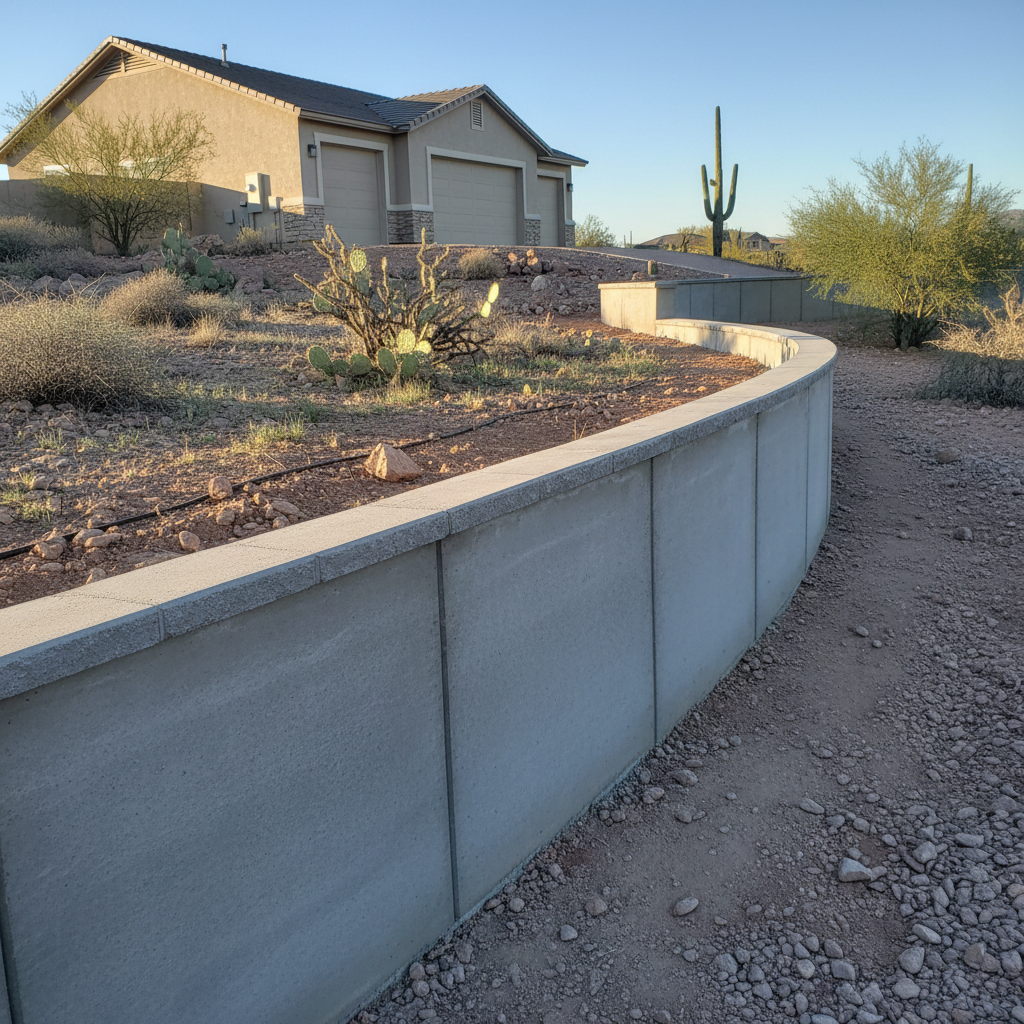
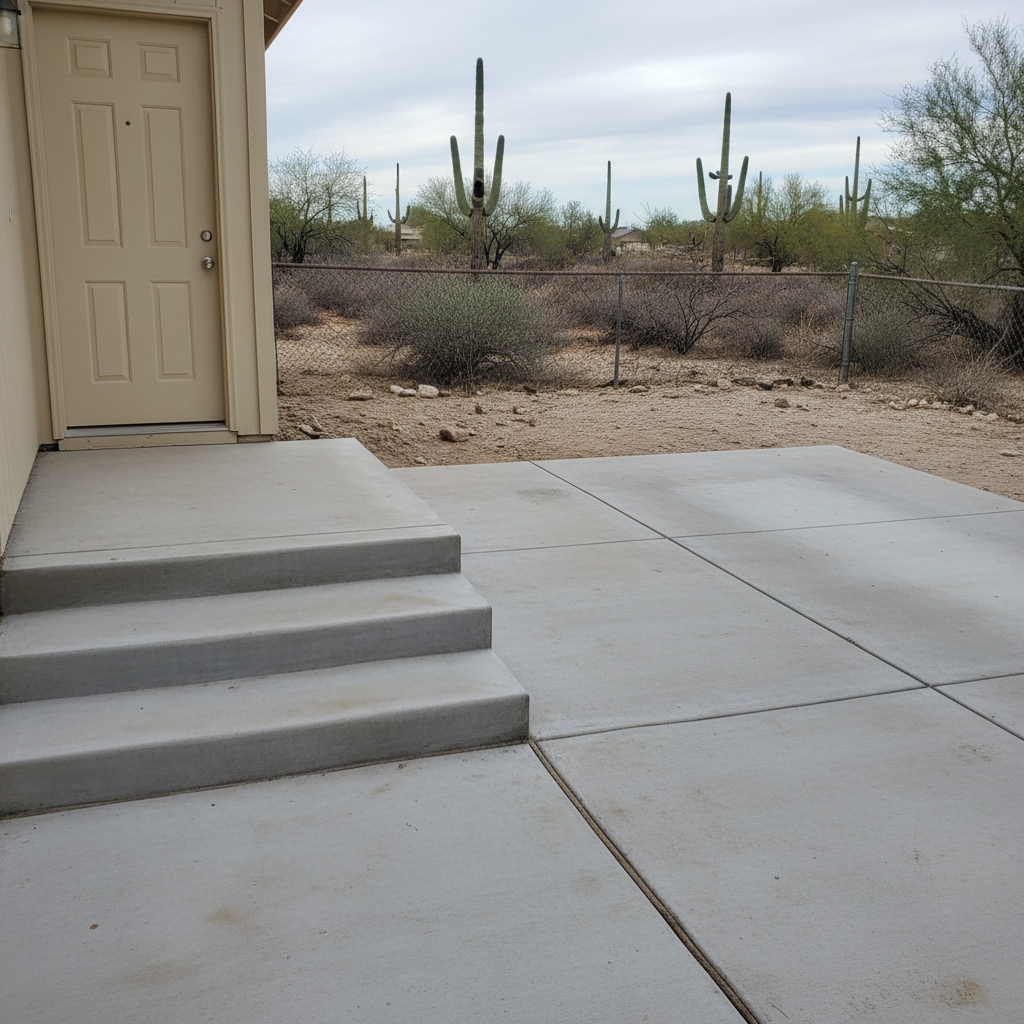
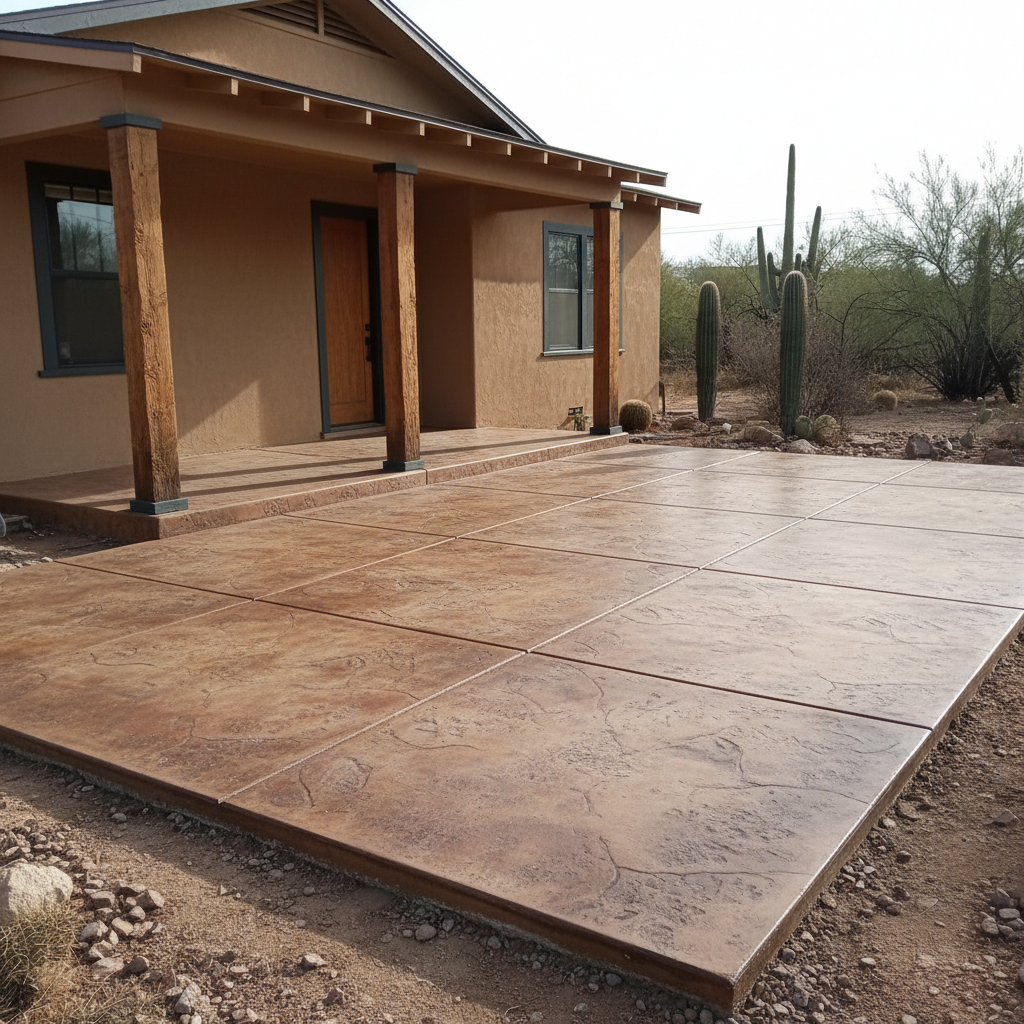
Every job below is one we do ourselves across Casas Adobes.
A driveway sees more load than almost anything else on your property, so we run rebar through it instead of wire mesh on anything that'll carry trucks or RVs. We dig past the caliche layer and compact a gravel base before we form it up. You'll walk on it in a couple days, but we ask you to keep vehicles off for about a week while it cures.
Patios get a broom or trowel finish depending on how much slip resistance you want near a pool or grill. We set control joints to break the slab into sections no bigger than about 10 feet across, so cracking happens along the joint instead of through your seating area. Mesh reinforcement usually does the job here since there's no vehicle load.
Stamped concrete gets you the look of flagstone, brick or slate pressed into the slab while it's still plastic, then a color hardener and release agent to bring out the pattern. It costs more than a plain broom finish because of the extra labor and the sealer needed to protect the color. We reseal it every couple years out here since Arizona sun fades color faster than a milder climate would.
Cracked slabs, spalling at the surface, and sunken sections by the garage are the repair calls we get most. Small cracks can be routed and filled, but a slab that's settled more than an inch or two usually needs leveling or replacement instead of a patch. We'll tell you straight if a repair is just delaying a full pour.
Shed pads, garage slabs and RV pads all need the same thing underneath, a compacted base thick enough that the slab doesn't flex under point load. We pour these at 4 inches minimum, thicker if it's carrying heavy equipment. A vapor barrier goes down first if you're planning to finish it out as living space later.
Walkways get joint spacing cut every 4 to 6 feet so they don't crack randomly underfoot. We slope them slightly away from the house so water doesn't pool against the foundation after a monsoon. A walkway is usually a one-day job from forming to finish.
We wash back the top layer of cement paste while the slab is still green, exposing the rock underneath for a textured, non-slip surface. It holds up well around pools and entries where you need traction. The aggregate can be local river rock or a decorative stone you pick out ahead of time.
Pool decks need a lighter finish or an integral color because dark concrete gets too hot to stand on barefoot by mid-morning in summer. We slope the deck away from the pool so backwash and splash don't pond at the coping. Expansion joints go in around the pool shell so the deck can move independently of the shell itself.
Footings for a block wall or room addition need to bear on undisturbed soil, not fill dirt or old caliche spoil. We pour to the engineer's spec on a stamped plan, and to standard depth and width when no plan is called for.
If a section of walkway or patio has sunk an inch or two but the concrete itself is still sound, we can pump a cement slurry underneath to lift it back level instead of breaking it out. It's faster and cheaper than replacement, but it only works if the slab isn't already cracked through. We'll tell you on-site which situation you're dealing with.
Four steps, and no surprises in any of them.
You tell us what you want doing, we look at what is actually there, and we ask the awkward questions early.
In writing, itemised, free. If something might add cost later we flag it now rather than at the end.
Same crew throughout. We cover your floors, keep the dust down and tidy up before we leave each day.
You point out anything you are not happy with and we fix it before the invoice, not after.
A few driveways, patios and slabs we've poured around the area.
This is the range we drive for concrete work without an extra trip charge.
Questions that come up once a project is actually scheduled.
Describe the problem and we will tell you what it probably is. No obligation.